But I Was Also 10: On Nostalgia

The other day I was watching The Simpsons. Yes, I'm still watching it. It's pretty much just inertia at this point; it would take more effort to stop now than to just keep going. There have been a few good episodes over the last 20 years. But that has almost nothing to do with the show's appeal for me. I grew up watching it. The show is slightly older than I am, and I remember watching it for pretty much my whole life. It brings back memories sitting in front of the TV's glow, laughing until I cried when Homer asks Bart if he wanted to go by Homer Junior, because "the kids can call you Hoju." It's very nostalgic.
I don't like nostalgia much because usually it's the view of a past that wasn't real. It's the essentialization of the way things were as the way things ought to be. But I know I'm not immune to its appeal sometimes. It's comforting in a world that feels very chaotic; with everything constantly shifting under our feet, the [impermanent](https://www.renwakefield.com/the-beauty-is-right-here/) nature of the present makes us long for stability. I get the appeal of a world before smartphones, or a pizza party with your friends in front of the Nintendo 64. I remember those things fondly too. But I was also 10.
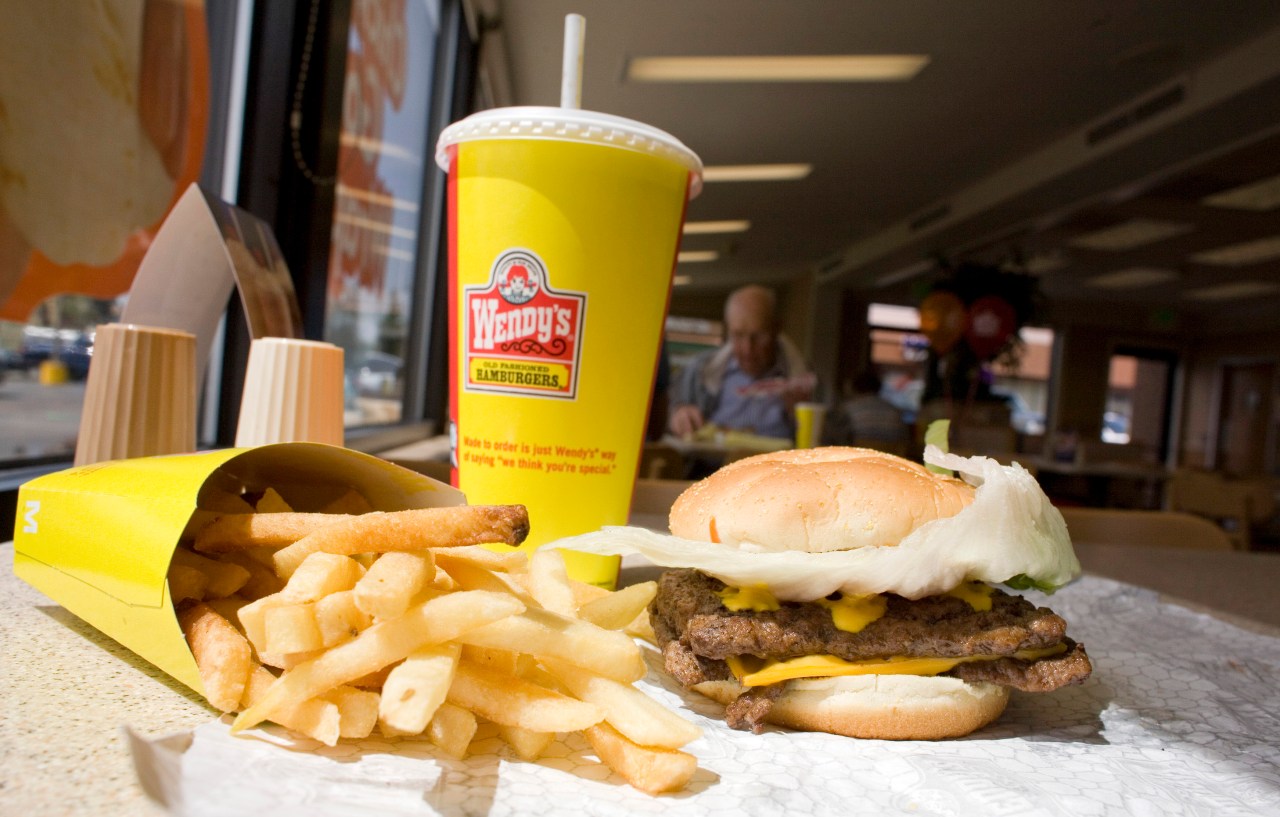
American culture is obsessed with nostalgia. Our current moment is awash with desires to turn back the clock. The "Make America Great Again" movement yearns for turning back to a past that never really existed, and the opposition dreams of a time before Donald Trump. On the lower end of the stakes, we've gone through the era of 80s nostalgia on television (Stranger Things, The Goldbergs, and The Americans) and are entering the 90s era (That '90s Show, Yellowjackets, Ted, and X-Men '97). We've rebooted Full House, King of the Hill, Law & Order, Frasier, Mean Girls, Street Fighter, Batman several times, Baywatch, Jurassic Park. McDonald's made Happy Meals for adults. Wendy's faced shockingly overwhelming demand to bring back the yellow packaging and they did. Taco Bell has a throwback menu to capture the nostalgia market. People long for things like 24-hour Walmarts, 2016 memes, analog alarm clocks, Scholastic book fairs, flash animations, sit-down Pizza Huts, that iOS app that looked like you were drinking a beer; the list goes on and on and on and on. It's interesting what people end up attaching to.
As inundated as we are with all this, it's not exactly new in America. I remember going to Johnny Rockets growing up, a diner with a 50s aesthetic with old-style jukeboxes. American Graffiti came out in 1973 and was a huge part of kickstarting 50s nostalgia just 14 years later (10, if you buy the argument that some people make that the 50s ended in 1963 in America). People in the 60s, turbulent as they were, longed for the simplicity of the 50s. People in the 50s looked fondly on the 20s, with their nostalgia crystallized in films like Singin' in the Rain. And the 30s celebrated the good old days of the 19th century, 1890-1899, dubbed back then "The Gay '90s." There's always a past, sort of half-remembered, that we're measuring the present against.
It's not really a coincidence that people are always talking about how much better it was when they were kids. The world seems safer; you haven't been exposed to as much tragedy yet, usually. You don't have any responsibility. Friendships have less baggage. Layers of innocence get peeled away as we age and become more aware of the difficulties of the world around us: violence, political strife, the death of loved ones, poverty. We desire a time where suffering didn't exist. This is an appealing fantasy, but it is a fantasy. That's the First Noble Truth that the Buddha teaches: in life, there is suffering (Pali: dukkha). Longing to get away from that just makes you suffer more. That's the Second Noble Truth: that suffering is caused by craving, in this case the craving to escape suffering.
I came across a meditation from Buddhist monk Brother Phap Luu called [Looking Deeply into the Phone](https://web.plumvillage.app/item/looking-deeply-into-the-phone-9-minutes). In it, he points out that the phone we hold so much is entirely composed of non-phone elements. It's composed of the minerals the miners painstakingly toiled to remove from the earth. It's made from millions of lines of code, written over sleepless nights and a considerable amount of coffee. All these things are not the phone, yet they come together to make what we call the phone. We are exactly like the phone. I am entirely composed of non-me elements. I am the blood and bone that make up my body. I am my parents and my ancestors. I am my culture, my teachers, my wife, my friends, and my family. I am all of these things that are not me.
So it should come as no surprise that people's culture in their formative years leads them to nostalgic reflection on the superiority of their times. They are their culture; the time they grew up in is part of them. Nostalgia, like us, is composed of non-nostalgia elements. It's no wonder people say that back in their day, kids were better behaved. The kids around them were raised with the values that became part of them, and the values that shifted over time feel wrong and unfamiliar. The driving root of nostalgia isn't just liking the things you grew up around. That's natural. It's mistaking the way things were for the way things ought to be
Nostalgia costs us. It makes today feel lacking. If we're always thinking about the past, we're not really here in the present moment. It also limits our imagination; if we spend our energy, mental or physical, trying to make life like it was in the past, we limit our ability to transform the future. Things are impermanent; we can't ever make something the same again. You can't step in the same river twice, as Heraclitus says. So we have to make a new future, one rooted in the past but in a realistic view of it. It does us no good to romanticize the past. Nostalgia is an emotion brought forth from memories that sometimes we know aren't true. It's past-directed, but at a past composed of media, fallible memories, warm feelings, and dissatisfaction at the present.
I struggle a lot with wanting the world to be different. I'm always thinking about how wrong things feel. How wrong the state of the world is. How wrong it is how people suffer and die. How wrong discrimination is. Wrong, wrong, wrong. It weighs heavily on me. However much I wish the world was different, though, it is what it is. I try to be clear-eyed that suffering has always existed, and always will. To know that there is no idyllic past where things were how I think they should be. I know that to make that world, I have to work. Not alone, but with everyone. We can't make a world free of suffering, but we can make a better one tomorrow, if we aren't held back by the past. The impermanent nature of all things means there is no past we can hold on to. There is no future yet to dream of. There is the now that we shape with our actions to push forward. There is today where we can make true the nostalgia of our past.
References
The nostalgia subreddit, a great place to relive your childhood if you are 25-45.
 Florence King

Great article from 1986 about the history of American nostalgia. I love the closing prediction: "I predict that we will look back longingly to the ‘70s when we made reincarnation, that very symbol of eternalness, the latest thing." I don't think that one panned out.
 Jan Willis


Section 7.2 deals with emotion and memory. I credit this article citing Howard 2012 for the observation that nostalgia is often composed of nonveridical claims that produce emotion anyway.
 Iman Palm
I feel like I personally saw this demanded 100,000 times.