The Beauty is Right Here

On September 9th, I sat to meditate, like I do every day. I'm trying to work my way through every guided meditation on the Plum Village App. Ambitious, but I've got time. That night I happened upon Brother Bao Tich's Guided Meditation on Impermanence. Impermanence has been a fascination of mine, ever since I read Sigmund Freud's "On Transience" in college. It's something I struggle with, personally. My anxiety creeps into even my happiest moments, remembering that this is only temporary, that it will pass, that everyone I love will die. It's debilitating, at times. So when I encountered Freud's aesthetic appraisal that impermanence actually increases the value of something, it opened my eyes to a new way of thinking.
Impermanence is a foundational part of Buddhist thought. It's universal. Thich Nhat Hanh called it "a mark of all things." Everything we know comes into being and passes away. But it was Brother Bao Tich's framing that really shifted my perspective further from my old pessimistic reading of impermanence.
"Aware of my body, I breathe in. Seeing the impermanence of my body, I breathe out."
"Aware of the planet earth, I breathe in. Seeing the impermanence of the planet earth, I breathe out."
"Aware of the human species, I breathe in. Seeing the impermanence of the human species, I breathe out."
"Aware of governments, I breathe in. Seeing the impermanence of governments, I breathe out."
"Embracing the impermanence of everything, I breathe in. Thanks to impermanence, everything is possible. I breathe out. Impermanence. Hope."
That last section hit me like a lightning bolt.
When everything passes, we are free from the past. We're free to create anything. It's not that we aren't tied to the past; everything is contingent on what came before, after all. The seeds of the old are in the new, so what passes away is never really gone, only transformed. But we aren't bound by it. At any moment, we can choose to begin again.
I found this theme again and again when I studied philosophy. Marcus Aurelius, a surprising combination of Roman emperor and Stoic philosopher, wrote, "Contemplate continually all things coming to pass by change, and accustom yourself to think that Universal Nature loves nothing so much as to change what is and to create new things in their likeness." This comes from Meditations, which is properly named, though it's not his title, because we have to contemplate impermanence. It's not just that things change; we have to get used to that idea to live well and understand the world.
Heraclitus, a Greek philosopher from around 500 BC, identified the universe as always in flux. Things are the same and not the same. There's not one enduring essence of a thing. A river is a river, but it's not the same water as before. We see the river, and it seems to be one thing, but the water is new, the current changes, there are new occupants all the time. In my view, we see the river, but its permanence is something we added with our own minds.
Friedrich Engels took it further. He rooted his philosophy in G.W.F. Hegel, who himself leaned heavily on Heraclitus. Engels thought that change and impermanence were fundamental to the very physics of the universe. Contradiction, the unity of opposites, is motion. Everything has the opposite of itself in it; hard becomes soft, slow becomes fast. Things are propelled not by having one single quality, but by having two attributes in one. This churn means nothing is static; everything is always changing, shifting attributes and becoming new, while at the same time retaining a seed of the old.
Since nothing is permanent, the future is up for grabs. We make our own futures. I create my new self out of the old; I can choose to stop my unwise behavior and become a new person from this second onward. As a collective, we can make a new future out of what we have now. Things don't have to continue as they are. The world feeling set in stone can make us feel that we're alone, that we're bound to a static state of affairs, isolated. But we're all in this ever-churning universe of change, in the same mix of flux affecting one another.
Things are still contingent, of course. We can't suddenly choose to fly or rewrite the past. But we can push to change the things we don't like about the world. We can abandon our isolation and start building connection. We can abandon the chains of the past and reforge the future. What is is not what has to be.
That's all easier said than done. Everything is conditional, so everything is impermanent. However, our conditions still exist. It takes work to change yourself. It takes a lot more work to change the world. But the good thing is that our suffering changes too. The things about the world that make us suffer are not forever. Grief stays with us because love stays with us. The transformations of our emotions are our closest way to understand impermanence; dealing with impermanence is the hardest thing we have to do, yet at the same time the most liberating.
I had a nice moment with my dog, Chase, one morning. I took him out and he went down a hill to sniff around and do his usual stuff. He had a little trouble getting back up, moving slower than usual. Getting older. Sometimes that makes me sad, but that day all I felt was just this overwhelming feeling of love for him. My heart just was full of care for this creature. All I want to do is give him good days for as long as he's here with us. He is impermanent. I am impermanent. But the beauty is right here.
References


Brother Bao Tich's Meditation, which inspired the post.
 Dismiss
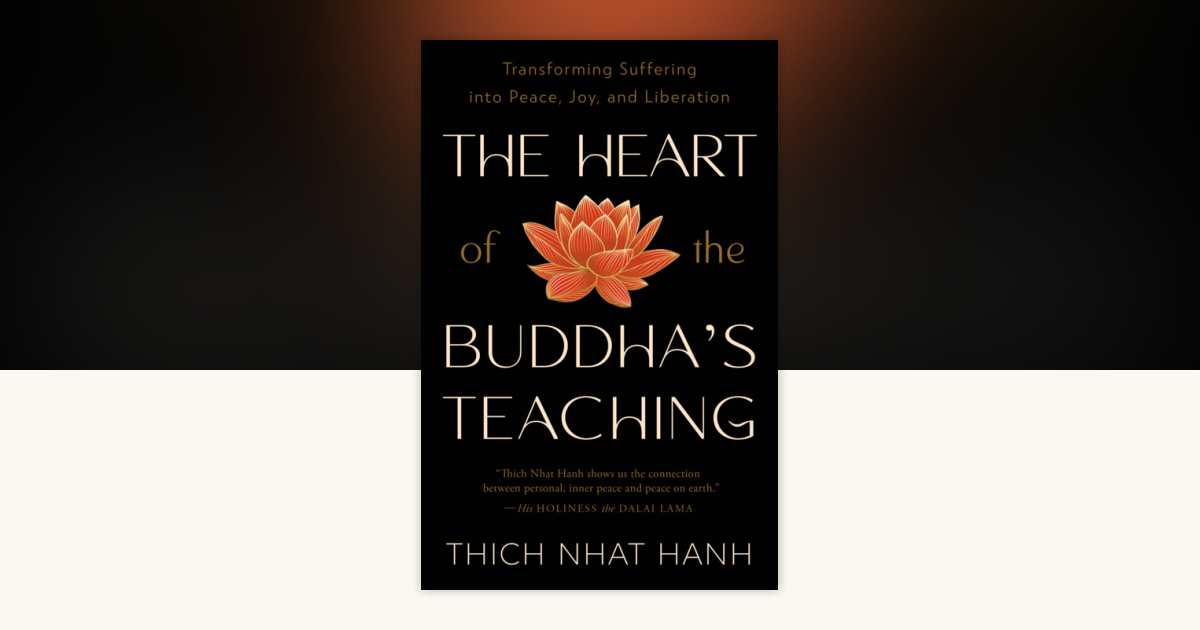
Thich Nhat Hanh's The Heart of the Buddha's Teaching, where I borrowed the word mark to describe impermanence. "Impermanence and nonself are 'universal.' They are a 'mark' of all things."


The cited quote from Meditations by Marcus Aurelius is section 4.36, translated by Arthur Spenser Loat Farquharson.
 Julia Evans

Sigmund Freud's "On Transience." This page is just excerpts; originally published 1916.


Source for Heraclitus' fragments, as well as just a great overview.
 Engels

Source for Engels on motion and contradiction.
 Hegel
Source for Hegel. He actually puts it even more strongly than I do: "Here we see land; there is no proposition of Heraclitus which I have not adopted in my Logic."